How to start your home apothecary with medicinal herbs

A well-stocked home apothecary can be a powerful tool for promoting wellness and addressing common ailments naturally. Whether you’re dealing with seasonal sniffles, digestive discomfort, or simply looking to boost your immune system, having the right remedies at your fingertips allows you to support your health naturally. In our home, natural remedies play a central role in caring for ourselves and our children. Building your own home apothecary will give you confidence in caring for your family’s well-being using the wisdom of herbal medicine.
Here’s how to get started by stocking up on dried herbs, tinctures, oils, and some other key ingredients for making your own remedies at home.
Dried Herbs: The Foundation of Your Apothecary
Dried herbs are a must-have in any home apothecary. You can use them in herbal infusions, tinctures, salves, and more. With just a small collection of dried herbs, you can create soothing herbal infusions, oil infusions for topical remedies, or even tinctures to capture their benefits in a potent liquid form.
Here’s a list of herbs to consider stocking up on, especially if you’re just starting out. You’ll find many of these herbs in my blends:
Chamomile – Gentle enough for children, soothing for the digestive system, and calming before bed.
Lavender – Great for relaxation, calming nerves, and as a gentle sleep aid.
Calendula – Known for its skin-healing properties, ideal for salves and lotions.
Peppermint – Helps with digestion, headaches, and respiratory support.
Echinacea – An immune booster often used at the first sign of illness.
Elderberry – A powerhouse for immune support, especially during cold and flu season.
Tulsi (Holy Basil) – An adaptogen that helps balance stress and boost immunity.
Nettle Leaf – Rich in minerals, great for nourishing herbal infusions.
Lemon Balm – Calming and soothing, often used for anxiety and digestive support.
Raspberry Leaf – Rich in vitamins and minerals, especially beneficial for supporting women’s reproductive health and toning the uterus. Great for menstrual health and during pregnancy.
These dried herbs can be used on their own or blended together to create customized teas for a variety of purposes.
Our online course A Journey Through Medicinal Herbs, helps you connect with 10 of my favorite plants and you can purchase the herb bundle to bring all 10 herbs into your home.
A Note on Storing Dry Herbs:
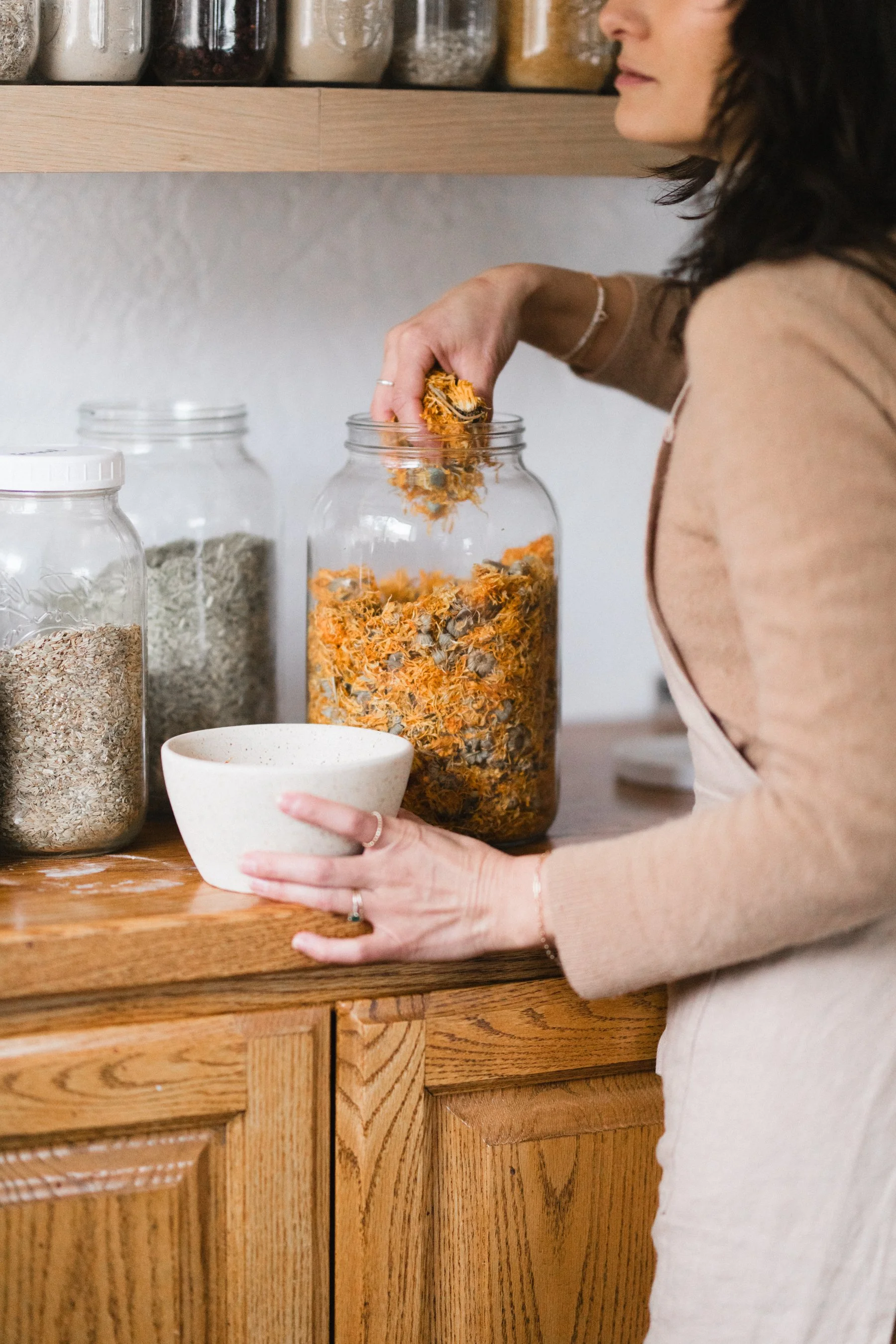
When storing herbs in your home apothecary, it’s important to protect them from air and sunlight. Both can degrade the potency of your herbs over time. Exposure to air causes herbs to oxidize, which can lead to the loss of their essential oils and medicinal properties. Meanwhile, sunlight can break down the active compounds in herbs, reducing their effectiveness.
In my photos you are seeing the herbal apothecary in my brick-and-mortar store. The herbs are displayed in a way that looks beautiful for visitors to see and it’s a fun conversation starter. I use these herbs to experiment and due to the high demand, they don’t last long in their containers. For the herbal remedies we offer here, we use freshly sourced herbs that come in dark and sealed packaging.

Herbal Infusion Blends: Easy, Pre-Made Options
Having a few pre-made herbal blends in your apothecary makes it easy to brew a healing cup of tea when needed. As you may have already heard, I drink herbal infusions all day as a replacement for plain water. These infusions taste great and help me stay hydrated while enjoying the variety of benefits from the herbs. Consider stocking up on blends for specific purposes, such as:
Digestive Support – Helps promote gut health and healthy digestion.
Immune Boosting – With antimicrobial and immune-boosting properties
Relaxation and Sleep – Calming herbs for nervous system support.
Nutritional Support – With herbs packed with vitamins, minerals and enzymes.
Having these blends ready can save you time when you’re feeling under the weather or just need a moment to unwind.
How to make an herbal infusion
An infusion is herbal tea given a much longer steep.
Put 1-2 tablespoons of herbs in a large teapot or a 64 oz mason jar.
Pour boiling water over, cover, and let it steep on the counter all day (or overnight). A large kettle works great for boiling enough water fast.
Strain and drink it throughout the day in place of plain water.
Refrigerate leftovers for up to 3 days.
I've made a pot like this every morning for seven years. I boil the water for my chai and my infusion in the same kettle, and yesterday's spent herbs go to my potted plants.

Tinctures: Potent and Long-Lasting
Tinctures are concentrated herbal extracts, made by steeping herbs in alcohol (or glycerin) for several weeks. A few drops go a long way, and a well-made tincture keeps for years.
I used to make and sell my own tinctures on this website, but working and selling alcohol products is a tricky business I chose to step away from. These days I've chosen to put my focus on the daily infusions, the ritual I believe does the most for most people. But tinctures are simple to make at home, and you can make them with the same herbs you already have in your kitchen.
How I make a simple tincture
Fill a clean glass jar about halfway with dried herbs. (Dried herbs swell, so half is plenty.)
Pour 80 to 100 proof vodka over them until the herbs are covered by about an inch or two.
Blend the entire mixture and pour back into the jar.
Close the jar, label it with the herbs and the date, and keep it somewhere dark.
Shake it every day or two for 4 to 6 weeks.
Strain through a fine strainer or cheesecloth, squeezing out as much liquid as you can, and store it in an amber glass bottle.
For an alcohol-free version, use 3 parts vegetable glycerin to 1 part water instead of vodka. Glycerites are gentler, less potent and sweeter. Alcohol tinctures might last 2 or 3 years if air-tight, glycerites about a year.
Using my blends for tinctures
Some of my blends make lovely tinctures:
Calming (passionflower, lavender, chamomile, spearmint): a few dropperfuls in the evening, about 2 hours before bed.
Immunity (echinacea, yerba santa): to have on hand through cold season. Use 3 times a day when others around you are sick.
Breathe (elderberry, usnea lichen): to have on hand through cold season. Use 3 times a day when fighting a cold.
Digestive (lemongrass, fennel seed): a few drops before or after a heavy meal.
Others are best kept as infusions. Nourishing is a good example: nettle, oatstraw, and raspberry leaf are valued for their minerals, which come out best in a long water infusion, not in alcohol.
A note on safety: alcohol tinctures aren't a good fit during pregnancy or for young children. Glycerites or infusions are gentler options. If you take medications, check with your provider before adding a new herb.

Essential Oils: Aromatherapy
Essential oils are another versatile component of a home apothecary. They can be diffused for aromatherapy, added to carrier oils for topical use, or used in homemade cleaning products and personal care items.
Here are some must-have essential oils to consider:
Lavender – Calming and soothing, great for stress relief and sleep. I use it in our Soothing Soak, Healing Salve and Unwind Candle
Peppermint – Energizing and helpful for headaches and digestive issues. I use it in our Awaken Candle.
Eucalyptus – Wonderful for respiratory support and clearing sinuses. I use it in our Menthol Rub.
Tea Tree – A powerful antibacterial and antifungal oil, great for cuts and scrapes. I use it in our Awakening Soak
Sandalwood – Known for its grounding properties, ideal for meditation and skin healing. I use it in our Grounded Candle.
Always dilute essential oils with a carrier oil, like coconut or jojoba oil, before applying them to the skin. And remember to use essential oils mindfully, especially around children or pets.
Other Ingredients for Medicine Making
Once you have your core collection of herbs, tinctures, and essential oils, you can start making your own remedies at home. Here are some additional ingredients and supplies that will come in handy:
Beeswax – For making salves and balms.
Shea Butter or Cocoa Butter – For moisturizing creams and lotions.
Carrier Oils – Such as olive, almond, or coconut oil for diluting essential oils and making infusions.
Salts and Clays – For detox baths or poultices for bug bites and skin irritations.
Beeswax and Emulsifying Wax – Essential for creating homemade lotions and balms.
Building Your Apothecary
Starting your home apothecary doesn’t have to be overwhelming. Begin by gathering a few key herbs, tinctures, and essential oils that suit your family’s needs, and build from there. As you grow more comfortable using herbal remedies, you can expand your collection and try new preparations, like syrups, poultices, or infused oils.
With time, your home apothecary will become an essential part of your daily life, empowering you to care for yourself and your family naturally, with the healing power of herbs at your fingertips.
Always consult with a healthcare professional before using herbal medicine, especially if you are pregnant, nursing, or taking medication. This article is for educational purposes only.
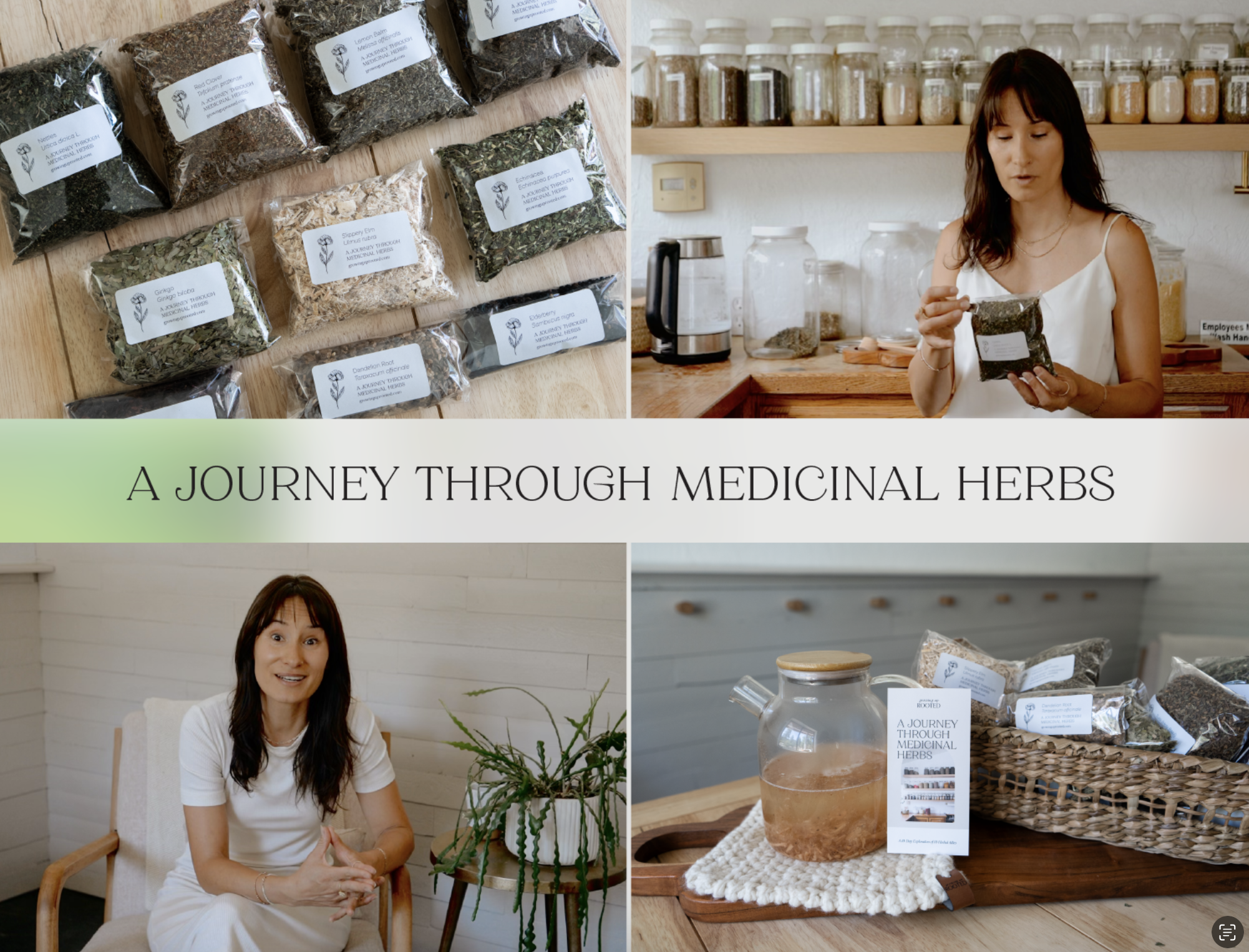
Ready to deepen your connection with medicinal herbs and bring the power of nature into your daily life? Join me on a journey to connect the wisdom of these healing plants. Whether you’re just starting out or looking to expand your knowledge, our self-paced course will guide you in getting to know 10 of my favorite medicinal herbs at a deeper level with all your senses. Learn more about A Journey Through Medicinal Herbs here.