What is an herbal infusion? (and how to make one part of your every day)
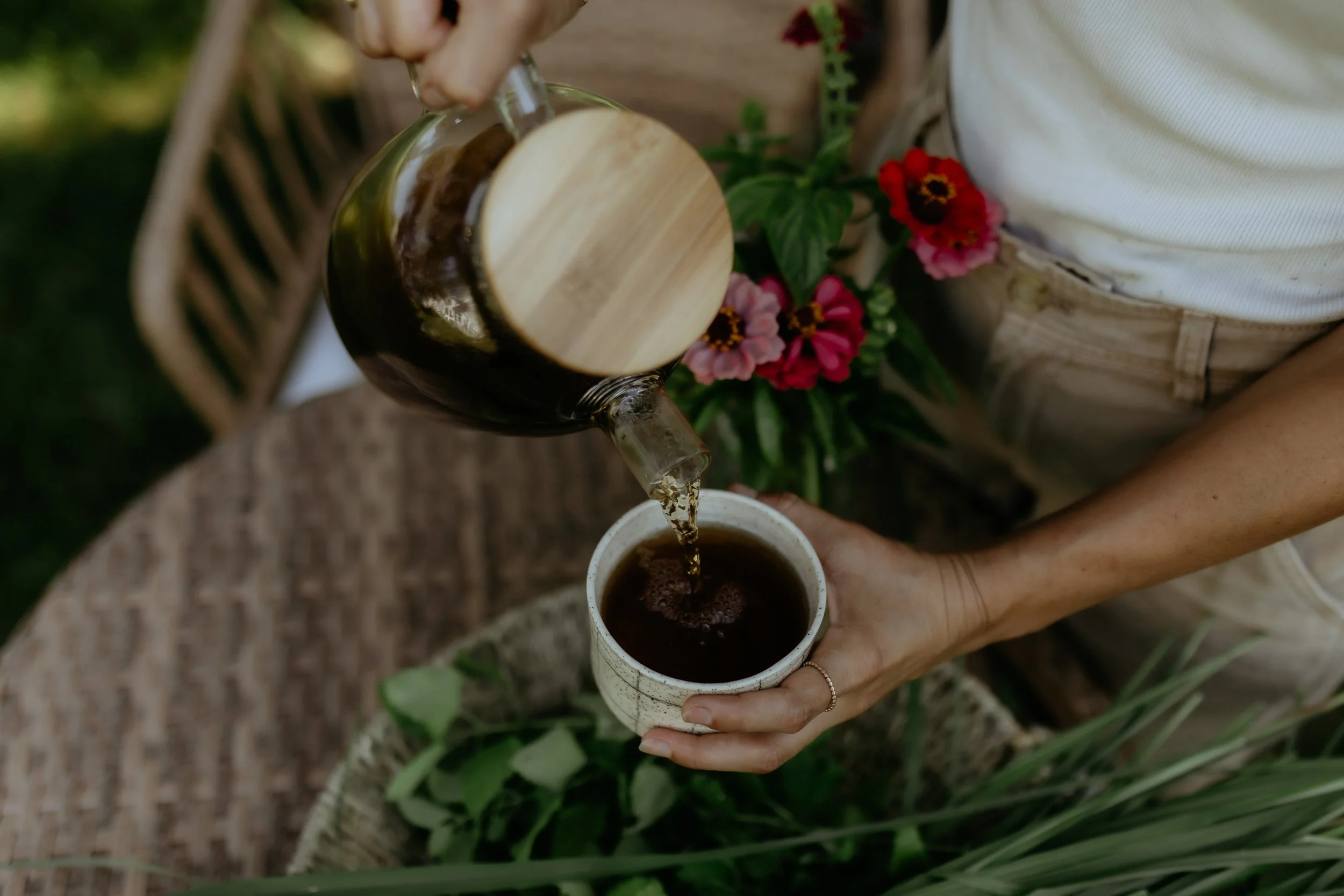
If you've ever steeped a bag of chamomile and called it a night, you're already closer to this than you think. Herbal infusions are not a complicated practice reserved for herbalists. They're something you can start tonight, with herbs you probably already have, using nothing more than a jar and some hot water.
This guide answers every beginner question about herbal infusions — how to make them, how much herb to use, how long to steep, which herbs to start with, and how to make them a real part of your everyday life. Not just occasionally. Every day.
Because at Growing Up Rooted, we believe the things we do every day become the life we live.
Herbal Infusions vs. Tea: What's the Difference?
People use these words interchangeably, and honestly, that's fine. But if you want to understand what makes an herbal infusion different — and why it matters — here's the simple version.
An herbal tea is what most of us grew up with. A tea bag, a few minutes of steeping, maybe some honey. Quick, pleasant, and perfectly lovely.
An herbal infusion is a longer, more generous version of the same idea. More herb. More time. More of what the plant has to offer.
The difference isn't about being more serious or more "herbalist." It's about extraction. When you give herbs more time in hot water — 15 minutes, an hour, or even overnight — you pull out more of the minerals, vitamins, and plant constituents that make them genuinely nourishing. A quick steep can give you flavor and some benefit. A long infusion gives you depth.
Think of it like the difference between a quick rinse and a long soak. Same water, very different results.
The terms "herbal tea," "herbal infusion," and "nourishing herbal infusion" are often used interchangeably on this site and across the herbal world. What matters more than the label is the practice.
How to Make Herbal Infusions at Home
There's no special equipment required. You probably already have everything you need.
What you'll need:
Herbs fresh or dried (preferably loose leaf, not a tea bag)
A mason jar, teapot, or mug with a lid
Hot water
A strainer
The method:
Measure your herbs and place them in your jar or teapot.
Pour hot water over the herbs — just off the boil is perfect for most herbs.
Cover and let steep at least 15 minutes, but letting it steep longer, an hour, or even until it reaches room temperature is better.
Strain and enjoy hot, at room temperature, or pour over ice.
That's it. There's no wrong way to do this.
The biggest shift from making regular tea is the cover. Keeping your infusion covered while it steeps holds in the volatile oils — the aromatic, beneficial compounds that would otherwise escape with the steam. It's a small thing that makes a real difference.
How Much Herb Should You Use?
This is the question beginners ask most, and it's easier than it sounds.
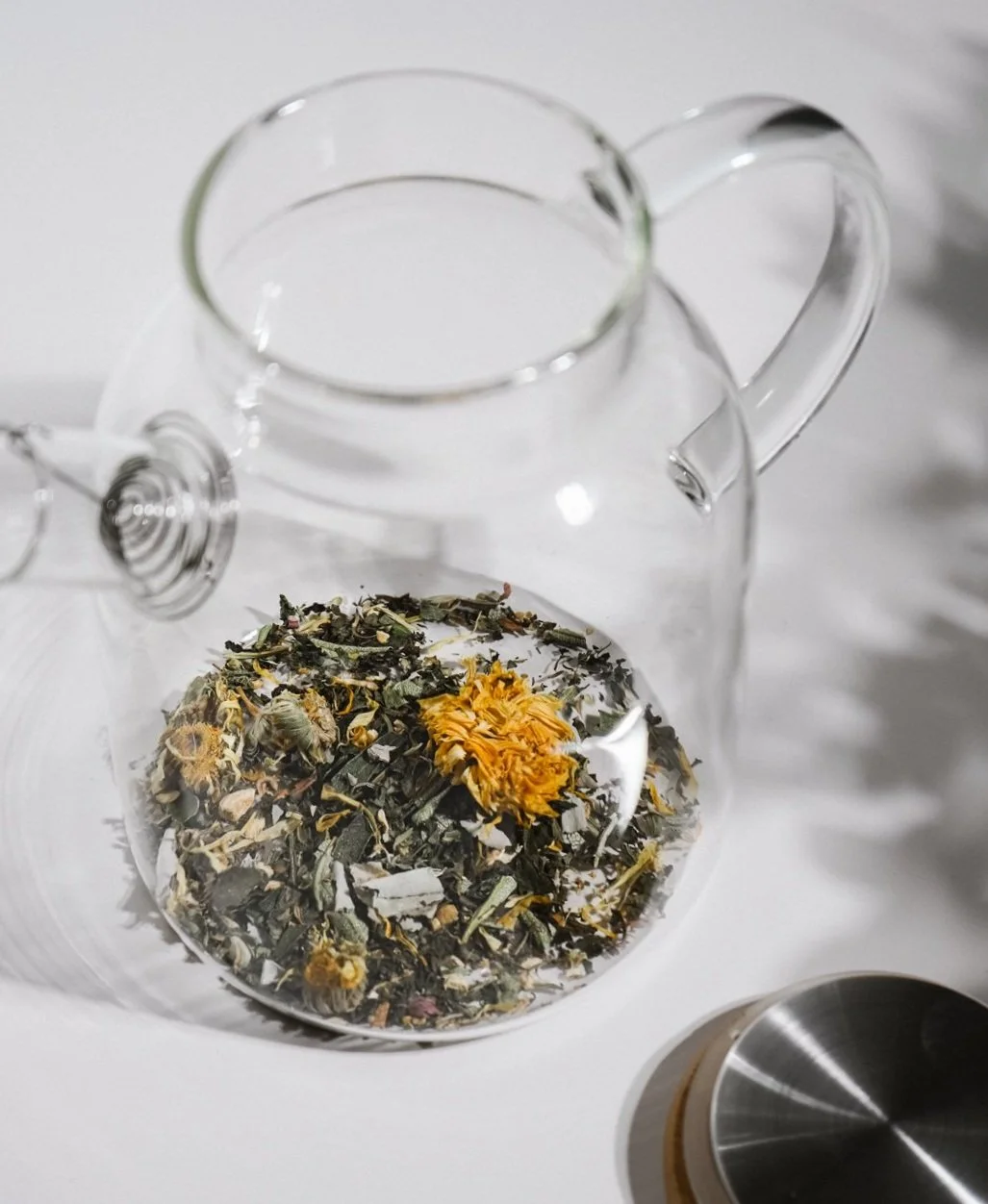
For a single cup: 1 teaspoon of dried herbs
For a quart jar or teapot: 1–2 tablespoons of dried herbs
For iced tea concentrate: ¼ cup of dried herbs to brew a strong base, then dilute over ice
Start with these ratios and adjust based on your taste. Some herbs are stronger than others. Some blends are meant to be subtle. Your palate will guide you once you start drinking them regularly.
One thing to know: herbal infusions are much more forgiving than people expect. Adding a little more herb won't ruin your infusion. It might make it stronger or more flavorful, but there's real room to experiment here.
How Long Should You Steep Herbal Infusions?
Longer than a tea bag. That's the short answer.
Minimum: 15 minutes Preferred: Until the infusion reaches room temperature — roughly 30 to 60 minutes for most jars Alternative: Overnight (see below)
The longer steep is what sets a nourishing herbal infusion apart from a quick cup of tea. It gives the water time to draw out the minerals and plant constituents that make these infusions genuinely supportive, not just flavorful.
If you're making a quart at a time — which is a lovely habit to get into — steeping until room temperature is a natural rhythm. You brew it, you let it sit, you go about your day, and it's ready when you circle back.
Can You Make Herbal Infusions Overnight?
Yes, and this is one of the most popular methods for a reason.
Make your infusion before bed. Let it steep on the counter overnight. Strain it in the morning. Your nourishing herbal infusion is ready before you've finished your first yawn.
This approach works especially well with mineral-rich, food-like herbs — nettles, oatstraw, red raspberry leaf, and similar plants that are gentle enough for long steeping. They're forgiving, flavorful with time, and deeply nourishing.
A few notes on overnight steeping:
Keep it covered.
Use herbs that are appropriate for long steeping — your Growing Up Rooted blends are all formulated with this in mind.
Strain it in the morning and refrigerate what you won't drink by midday.
Overnight herbal infusions have become a ritual for a lot of women in this community — a quiet act of preparation the night before that makes the morning feel a little more intentional.
Can You Drink Herbal Infusions Every Day?
Yes — that's actually the whole point.
Herbal infusions are most meaningful when they're consistent. One beautiful jar of nettles is lovely. Drinking nettles regularly, over weeks and months, is how you actually start to feel a difference.
The herbs most commonly used in daily nourishing infusions — nettles, oatstraw, chamomile, lemon balm, red raspberry leaf — are food-like plants. They're gentle, mineral-rich, and appropriate for daily use for most people.
One small thing to keep in mind: variety is your friend. Rather than drinking the same single herb every day indefinitely, rotating through different blends keeps your intake balanced and your palate interested. This is one reason blends are so useful — they offer variety within a consistent ritual.
If you're pregnant, breastfeeding, or managing a specific health condition, it's always worth checking in with your midwife or healthcare provider about which herbs are right for you.

Which Herbs Are Best for Beginners?
Start with herbs that are:
Gentle and food-like
Mineral-rich
Pleasant to drink
Safe for everyday use
Some of the most loved beginner herbs include:
Nettles — deeply mineral, earthy, and one of the most nourishing herbs you can drink regularly. The flavor is green and grassy, and it softens beautifully with time.
Oatstraw — gentle, slightly sweet, and wonderful for the nervous system. One of the most calming herbs for everyday drinking.
Chamomile — familiar, floral, and beginner-friendly in every way. It softens tension and is lovely on its own or as part of a blend.
Lemon balm — bright, lemony, and gently calming. One of the most approachable herbs for everyday use.
Red raspberry leaf — mild in flavor, deeply nourishing, and particularly loved by women. Works beautifully as part of a nourishing blend.
Spearmint — refreshing and bright, wonderful for adding flavor and making almost any blend more drinkable.
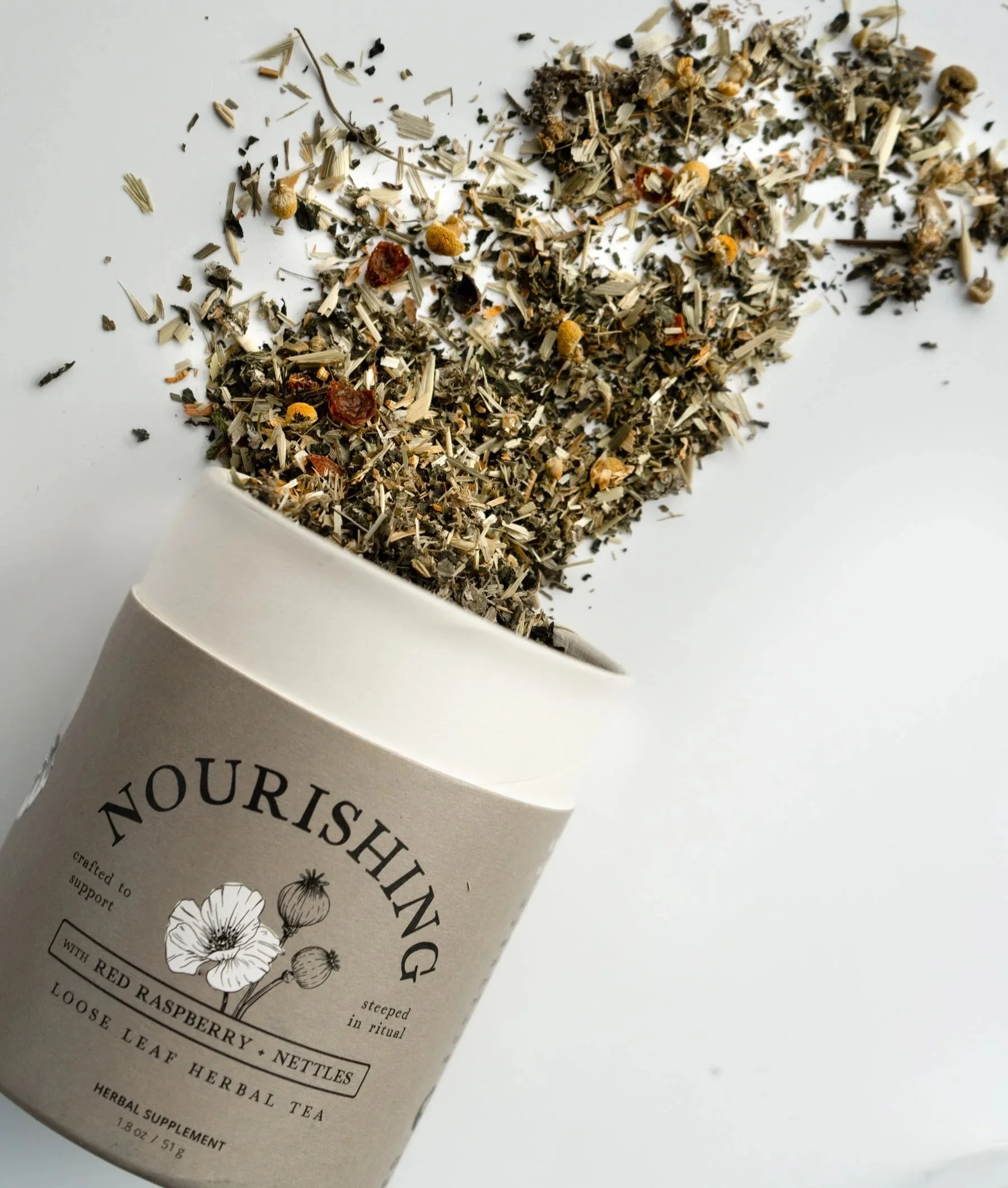
If you want somewhere to start, our Nourishing blend — built on nettles, oatstraw, red raspberry leaf, and chamomile — was formulated exactly for this. It's gentle enough to drink every day and rich enough to feel like something.
How Do Herbal Infusions Taste?
This is the question that deserves more honest conversation.
Some herbs taste immediately lovely. Chamomile is gentle and floral. Spearmint is bright and clean. Lemon balm is citrusy and easy.
Others — like nettles — are more of an acquired appreciation. Earthy, green, a little grassy. Not unpleasant, but not what most people expect from their first sip.
Here's what helps:
Blend unpleasant herbs with smooth ones. A blend balances flavor naturally — bright herbs lift heavier ones, floral herbs soften earthy ones.
Add a small amount of lemon peel or dried fruit. A little brightness goes a long way.
Try it iced. Some herbal infusions that feel a bit intense hot become incredibly refreshing cold.
Give it a few days. Taste adjusts. Ritual builds. What feels unfamiliar on day one often becomes something you genuinely crave by day ten.
Flavor is not an afterthought in how we formulate at Growing Up Rooted. Every blend is designed to be smooth and invite you back tomorrow.
Do You Drink Herbal Infusions Hot or Cold?
Both. Either. Whatever sounds good to you.
Hot infusions are grounding — something to hold in the morning, sip slowly, settle into the day.
Room temperature infusions are easy to drink in large amounts throughout the day, almost like water with intention.
Iced infusions are refreshing, especially in summer, and a great way to make mineral-rich herbs feel light and enjoyable.
One jar brewed in the morning can move through all three temperatures throughout the day. Start it hot, let it cool, pour the rest over ice in the afternoon. That's a full day of nourishment from one simple act.
How Should You Store Herbal Infusions?
Counter: Up to one day — fine for a jar you plan to finish by evening.
Refrigerator: 2–3 days — ideal if you're drinking it over a couple of days.
Herbal infusions are made with water and plant material, so they're perishable. If something smells off or looks cloudy in an unusual way, trust your instincts, feed it to a plant instead and brew fresh.
For most people, brewing every day or every other day becomes a natural rhythm. It only takes a few minutes, and fresh is always best.
Can Children Drink Herbal Infusions?
Many herbal infusions are gentle enough for children — but this is an area where it's worth being thoughtful, not cautious to the point of avoidance. My girls have grown up drinking herbal infusions and love them. When we are out of the house, I often have a bottle full of an infusion and that is the water we drink when thirsty.
Food-like herbs — chamomile, spearmint, lemon balm, oatstraw — are generally considered safe and well-tolerated by children in reasonable amounts. Chamomile tea has been used for children for generations.
A few things to keep in mind:
Serve smaller amounts than you would for an adult.
If your child has any known sensitivities or is on medication, check with their provider.
When in doubt, start gentle. A mild chamomile or spearmint infusion is a beautiful, caffeine-free alternative to juice, and children often love the ritual of helping prepare it.
What Do You Do with the Herbs Afterward?
Don't throw them away — give them back.
Compost them. Spent herbs are wonderful compost material.
Use them as mulch. Sprinkle them around the base of houseplants or in the garden. They'll continue to nourish the soil.
Re-steep once. Herbs can be used a second time by adding a small amount of fresh herbs to the spent ones. The infusion will be lighter, but it's still flavorful. This is a personal choice — Daniela typically doesn't re-steep, but it's a perfectly reasonable option if you want to extend your herbs.
There's something right about returning plant material to the earth. It completes the loop.
Making Herbal Infusions Part of Your Daily Life
Here's the truth about building a ritual: it doesn't stick because it's good for you. It sticks because it feels good to do it.
That's why the taste matters. That's why the vessel matters. That's why the moment of pouring hot water over herbs — the smell that rises, the color that blooms — matters.
A few practical suggestions for making this part of your day:
Start with one moment. Morning, afternoon, or evening — pick one time and anchor your infusion there. Morning jars are popular because you can heat up enough water to make your morning drink and an infusion at once. Evening jars are lovely because the act of making them signals that the day is winding down.
Keep your herbs visible. If they're tucked in a cabinet, you'll forget them. A jar of herbs on the counter is an invitation every time you walk through the kitchen.
Replace one thing, not everything. Start by replacing some of your daily water with an herbal infusion. Let it grow naturally into maybe replacing all of it.
Brew more than you think you need. A quart jar brewed in the morning is easy to finish by evening. It gives you enough to sip through the day without feeling like you're rationing something precious. Daniela brews a 60-ounce teapot that she aims to finish by the end of the day.
The goal isn't perfection. It's consistency. One jar, most days, over time — that's where the nourishment lives.
A Simple Place to Start
If you're new to herbal infusions and want somewhere to begin, our Nourishing blend was made for exactly this moment. Nettles, oatstraw, red raspberry leaf, chamomile, rose hips, and lemon peel — brewed as a daily infusion, it's the simplest way to replace water with something that genuinely nourishes you.
Brew a quart tonight. See how you feel tomorrow.
Have questions about getting started? Reach out — we're always happy to talk herbs.
FAQ
What is an herbal infusion? An herbal infusion is dried herbs steeped in hot water for an extended period — typically 15 minutes to overnight — to draw out their minerals, nutrients, and plant constituents. It's similar to herbal tea, but uses more herb and a longer steep time.
What is the difference between herbal tea and herbal infusions? Herbal tea typically refers to a quick steep with less herb. An herbal infusion uses more plant material and steeps longer, extracting more of the plant's nourishing qualities. The terms are often used interchangeably, and both are beneficial.
How much herb should I use for a nourishing herbal infusion? Use 1 teaspoon per cup, 1–2 tablespoons per quart jar, or ¼ cup if making an iced concentrate.
How long should I steep herbal infusions? At minimum 15 minutes, but ideally until room temperature (30–60 minutes). Overnight steeping is also a popular and effective method.
Can I make herbal infusions overnight? Yes. Brew before bed, steep covered on the counter, strain in the morning. This works especially well with gentle, mineral-rich herbs.
Do herbal infusions need to be refrigerated? If you're not finishing your infusion within the day, refrigerate it. It keeps well for 2–3 days in the fridge.
How long do herbal infusions last in the fridge? 2–3 days. When in doubt, smell it first — fresh is always best.
Can I drink herbal infusions every day? Yes. Daily use is the whole point for most nourishing herbal infusions. Gentle, food-like herbs are appropriate for everyday drinking.
Which herbs are best for beginner herbal infusions? Nettles, oatstraw, chamomile, lemon balm, red raspberry leaf, and spearmint are all wonderful starting points — gentle, flavorful, and safe for regular use.
Can children drink herbal infusions? Many gentle herbs like chamomile, spearmint, and lemon balm are well-tolerated by children in smaller amounts. Avoid strongly functional herbs without guidance.