Oatstraw Benefits: What oat straw is good for and how to drink it every day
The short answer: Oatstraw is the green grassy stem and leaf of the oat plant, harvested before it turns golden. Herbalists use it as a gentle, mineral-rich nourishing herb that calms the nervous system. It's traditionally used for stress, frayed nerves, and long-term nourishment, especially for women during pregnancy, postpartum, motherhood, and midlife. It's mild, pleasant and very easy to drink, and it works best as a long-steeped infusion you drink daily.

An herbal infusion blend with anourishing base of oatstraw and red clover.
What is oat straw?
Oatstraw comes from the same plant as your morning oatmeal, Avena sativa. It's harvested at a different stage and from a different part of the plant.
Oatstraw: the green stems and leaves, cut while the plant is still green. Mild, grassy, a little sweet.
Milky oat tops: the immature seed heads, gathered in the short window when they release a milky liquid if you squeeze them. They're prized for soothing the nervous system.
Oats (the grain): the mature seed we eat as food.
The whole plant soothes and nourishes. Oatstraw and oat tops are simply the parts herbalists reach for most.
Oatstraw benefits
It calms the nervous system. Oats are one of the classic herbs for people who feel stretched thin: wired, tired, and anxious. Oatstraw doesn't sedate you. It works slowly, and the effect adds up over weeks of drinking it regularly. That's why I love it for daily infusions.
It's a source of minerals. Oatstraw is traditionally valued for calcium, magnesium, and silica. A long steep in lots of water pulls out much more of the plant than a quick cup of tea does. The research on oatstraw is limited, so think of it as gentle, everyday nourishment, not a supplement.
It's easy to drink every day. The flavor is mild and slightly sweet, so it blends well with other herbs and doesn't wear on you. It's also caffeine-free.
It helps you drink more water. This one gets overlooked. When the water in your glass tastes good, you drink more of it. Most people who make oatstraw infusions drink them all day long.

Processing medicinal herbs harvested from the farm.
Oatstraw benefits for women
Most women who come to oatstraw are in a season that asks a lot of them.
Pregnancy: oatstraw is one of the gentlest nourishing herbs and is traditionally used during pregnancy. Always check with your midwife or provider about any herb you take while pregnant.
Postpartum and breastfeeding: growing, birthing, and feeding a baby all draw on your body's reserves. A daily nourishing infusion is one simple way to refill them.
Motherhood and busy years: for the woman running on empty, oatstraw is steady support for a tired nervous system.
Midlife and beyond: women often start paying more attention to bone health and minerals here, and oatstraw fits easily into a daily routine.
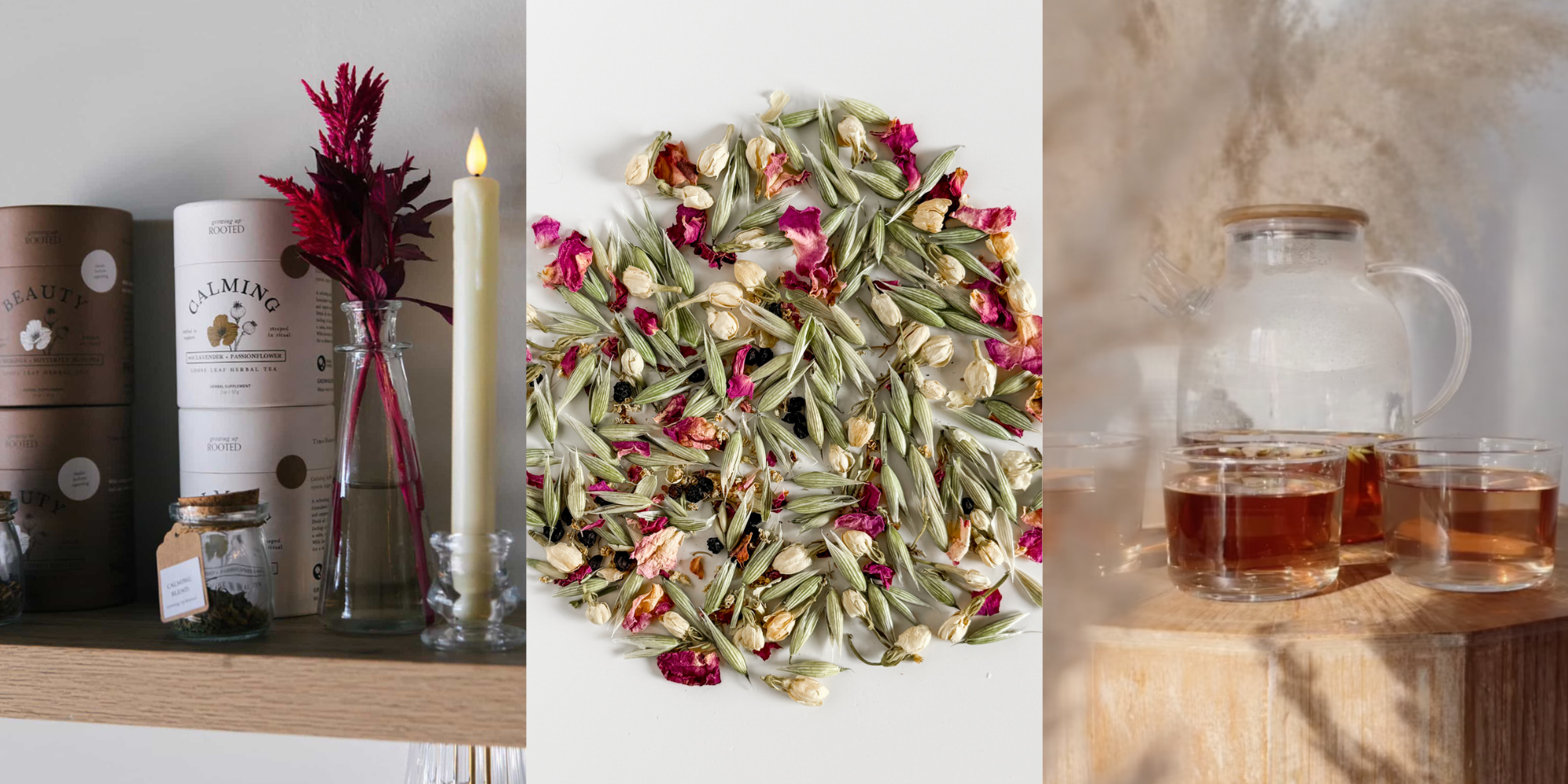
Oat tops — the flower in oat straw, used in a blend of medicinal flowers to soften and open the heart.
How to make an oat straw infusion
An infusion is tea given a little more time. More herb, more water, and a long steep.
Put 1 scoop (1 tablespoon) of herbs in a large teapot or a 64 oz mason jar.
Pour boiling water over, cover, and let it steep on the counter all day (or overnight). A large kettle works great for boiling enough water fast.
Strain and drink it throughout the day in place of plain water.
Refrigerate leftovers for up to 3 days.
I've made a pot like this every morning for seven years. I boil the water for my chai and my infusion in the same kettle, and yesterday's spent herbs go to my potted plants.
Want more detail? Here's exactly how I make mine every morning.
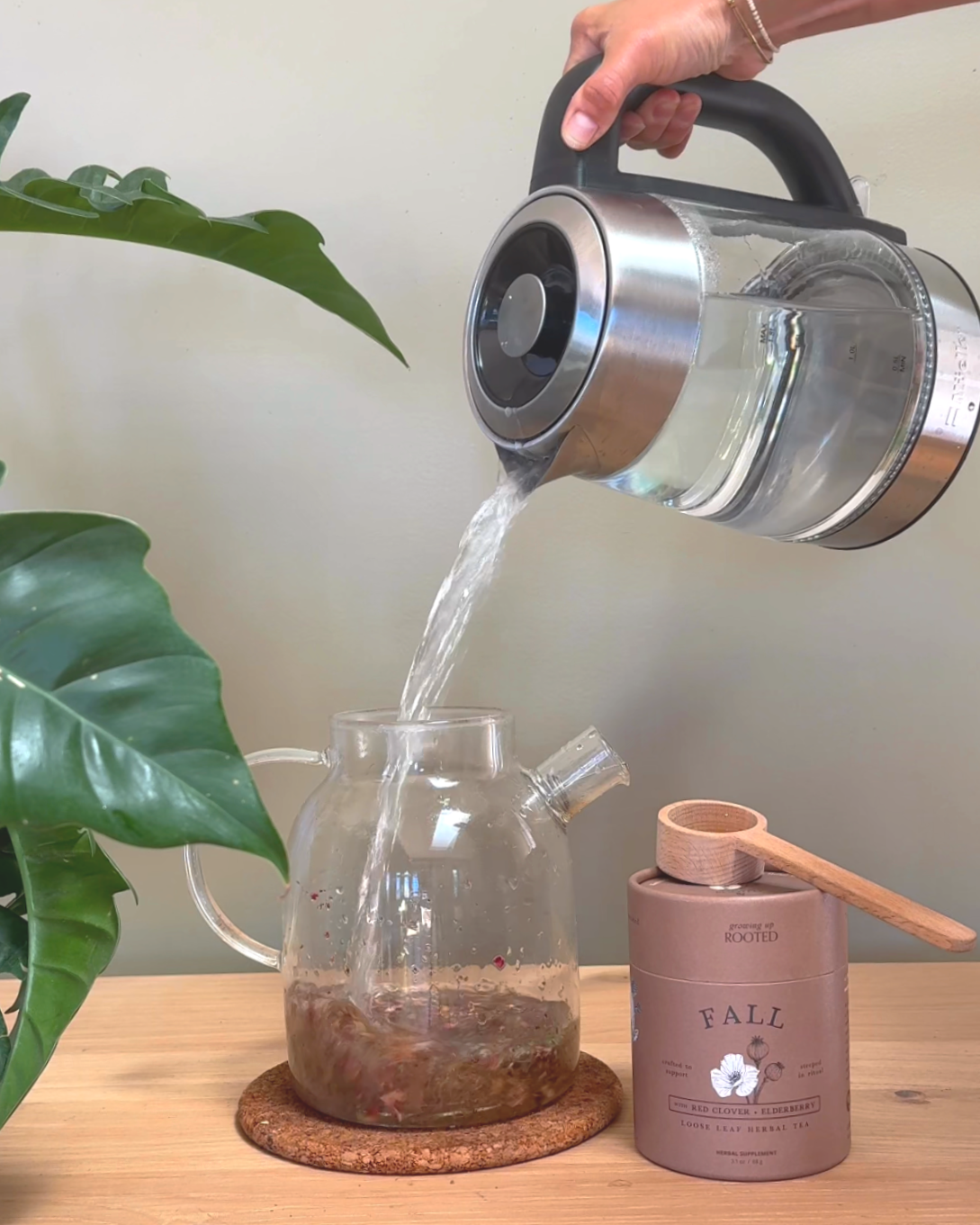
Making an herbal infusion to drink all day, in place of plain water.
Where you'll find oatstraw in our blends
Here's exactly where you’ll find oat straw in our blends:
Nourishing: red raspberry leaf, nettle, and oatstraw. This is our everyday mineral-rich blend and the one I suggest most often, including for pregnancy and postpartum.
Spring: our seasonal spring blend, with oatstraw alongside cherries and rose hips.
Bloom: made with the milky oat tops rather than the “straw”. It's softer and more heart-opening, for when you feel tense and want to unfold a bit.
Not sure which one fits? Take the Find Your Blend quiz and I'll suggest two.

Daniela, herbalist and gardener, in her herbal apothecary.
Is oatstraw safe?
Oatstraw is considered one of the gentlest herbs, but a few notes:
Gluten: our Nourishing and Bloom blends are not gluten-free. If you avoid gluten, try Mother in place of Nourishing and Calming in place of Bloom.
Pregnancy: check with your midwife or provider first. Nourishing and Bloom are the two blends I suggest during pregnancy.
Medications or health conditions: talk with your provider before adding any new herb.
Oatstraw FAQ
What is oat straw good for?
Traditionally, for calming frayed nerves, gentle mineral nourishment, and steady support during stressful or depleting seasons.
Can I drink oatstraw tea every day?
Yes. Oatstraw works best with steady daily use, which is how most herbalists recommend it.
What's the difference between oatstraw and milky oat tops?
Oatstraw is the green stem and leaf. Milky oat tops are the immature seed heads. Both nourish and calm; oat tops are considered especially soothing to the nervous system.
Does oatstraw have caffeine?
No. It's caffeine-free.
Can I really drink an infusion instead of water?
Yes, that's the whole idea. An oatstraw infusion is mostly water, with the plant steeped into it. Many of our customers tell us it's the first thing that has gotten them to drink enough water.
New to herbs? If you'd like to go a little deeper, join my free 5-day email series, A Day with Medicinal Herbs. It's an easy place to start.